
Optimising Performance and Recovery through Understanding Female Physiology
Tina Gough
6/7/2026
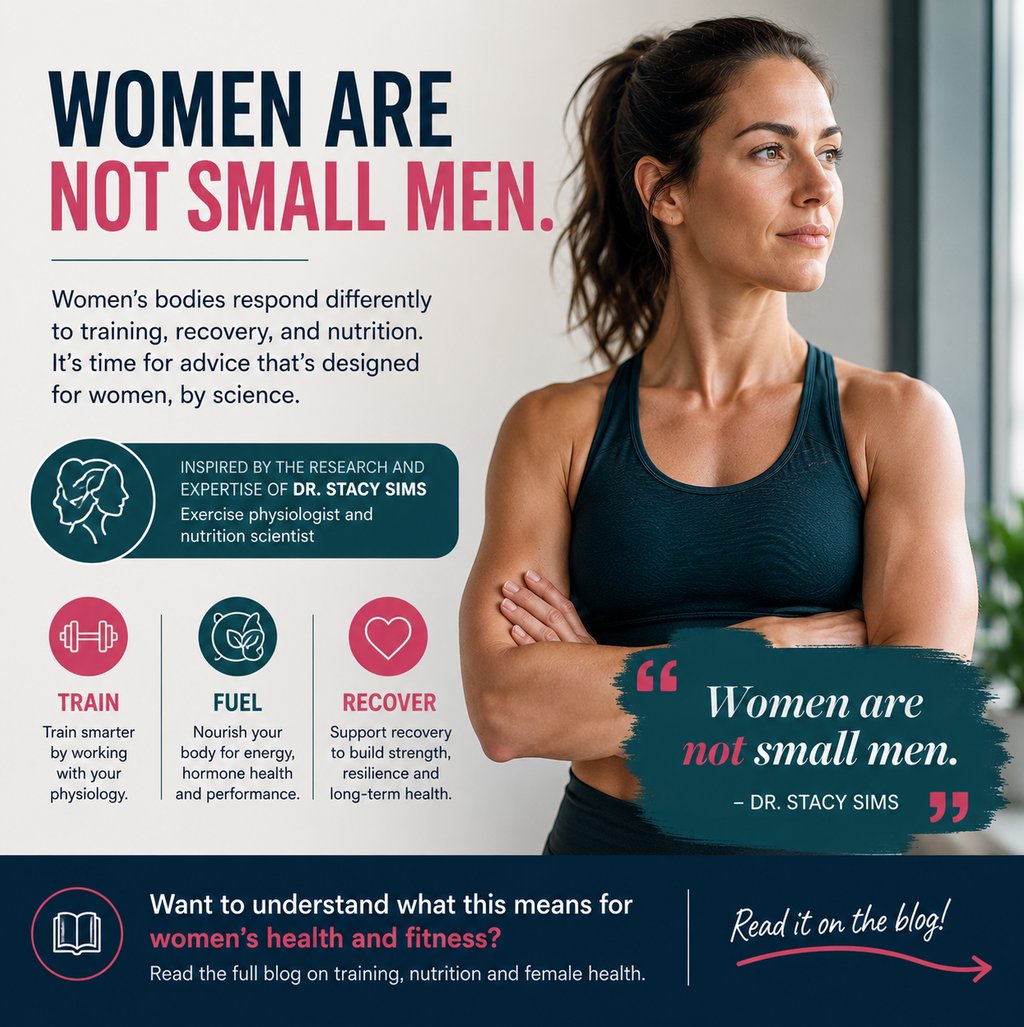
One of the most influential voices in female training and nutrition is Dr. Stacy Sims – an exercise physiologist and nutrition scientist who has revolutionised how women should train and fuel based on their unique physiology.
Her mantra? “Women are not small men.”
It’s a simple yet powerful reminder that most fitness and nutrition research has historically been conducted on men, and applying the same principles to women often doesn’t deliver the best results.
Training and Nutrition for Women. Dr. Sims’ key recommendations for female athletes and active women.
🔁 Cycle-Based Training & Nutrition
Dr. Sims places a major emphasis on understanding the menstrual cycle and how it affects training and nutrition.
Follicular Phase (Day 1–14, starts with period):
Hormones are lower, so your body is more resilient and insulin sensitive.
Train harder here: strength, HIIT, and performance-focused sessions go well.
Nutrition: Your body handles carbs better – so time carbs around workouts for fuel and recovery.
Include foods rich in iron and B vitamins to replenish what is lost during menstruation.
Luteal Phase (Day 15–28, post-ovulation):
Oestrogen and progesterone rise, increasing core temperature, fluid loss, and fat usage for fuel.
Focus on recovery and maintenance: Moderate intensities, more rest, and hydration.
Nutrition: Increase carb intake slightly, especially pre-training. Add magnesium-rich foods and stay on top of hydration with electrolytes.
Increase intake of anti-inflammatory foods like berries, leafy greens, and omega-3 rich fish.
📚 Reference: Sims, S. (2016). “Roar: How to Match Your Food and Fitness to Your Unique Female Physiology”
🍌 Pre-Training Nutrition
One of Dr. Sims’ strongest recommendations is for women to avoid training fasted, particularly in the morning.
Fasted training increases cortisol (a stress hormone), which can disrupt hormones, impair performance, and reduce muscle building potential.
Women especially need protein and carbs pre-training to stabilise blood sugar, preserve lean muscle, and improve workout outcomes.
Pre-Workout Snacks (30–60 mins before training):
Greek yogurt with fruit
Half a banana with peanut butter
Protein smoothie with oats
Rice cake with almond butter and honey
Boiled egg and a slice of wholegrain toast
If you’re training first thing in the morning and appetite is low, even a small carb-based bite can help – like half a banana or a few dried dates.
📚 Reference: Sims, S. (2021). “Women Are Not Small Men” course material, drstacysims.com
💪 Protein Timing and Recovery
Women don’t absorb or utilise protein the same way men do – and Dr. Sims recommends being more intentional about timing and dosage.
Aim for 30g of protein after training, ideally within 30 minutes.
Include leucine-rich sources like whey protein, chicken, eggs, or tofu to trigger muscle protein synthesis.
Spread protein intake evenly across meals (20–30g per meal) to support muscle maintenance and recovery.
Don’t under-eat! Chronic under fuelling is a huge issue for active women and can lead to hormonal imbalances, poor sleep, and fatigue.
📚 Reference: Areta JL et al. (2013). Timing and distribution of protein ingestion during prolonged recovery from resistance exercise. J Physiol.
💧 Hydration and Electrolytes
Women have a smaller fluid reserve and lose more sodium than men during exercise, especially in the luteal phase.
Dr. Sims recommends adding electrolytes to water during and after workouts to support hydration.
Don’t rely on thirst alone – sip fluids regularly, especially during intense or longer sessions.
Consider low-sugar hydration tablets or drinks with sodium, potassium, and magnesium to maintain balance.
📚 Reference: Sims, S. (2021). “Women Are Not Small Men”
🧠 The Mental & Hormonal Component
Dr. Sims also focuses on how training should support, not stress, your endocrine (hormonal) system.
For active women juggling work, family, and training, she advises:
Listen to your body, especially around your period.
Sleep, recovery, and stress management are just as important as workouts.
Adapt training during high-stress times or when energy is low.
Don’t train harder – train smarter, based on where you are in your cycle.
This approach leads to more consistent training over time, fewer injuries, and a healthier relationship with fitness.
Training should be individualised, empowering, and sustainable. Her advice encourages women to understand their bodies, fuel well, train with purpose, and recover smart.
Whether you’re strength training, doing cardio, or working toward a specific goal, her principles help you get more out of your workouts without burning out.
📛 References:
Sims, S. (2016). Roar: How to Match Your Food and Fitness to Your Unique Female Physiology.
Sims, S. (2021). Women Are Not Small Men course. drstacysims.com
Areta JL, et al. (2013). “Timing and distribution of protein ingestion during prolonged recovery from resistance exercise.” J Physiol, 591(9), 2319–2331.
Supporting your journey through every life stage.
info@primeff.co.uk
© 2025. All rights reserved.